Buy 3d-vermessung.eu ?
We are moving the project
3d-vermessung.eu .
Are you interested in purchasing the domain
3d-vermessung.eu ?
domain@kv-gmbh.de · 0541-91531010
Buy 3d-vermessung.eu ?
When do you conjugate "avoir"?
The verb "avoir" is conjugated when talking about possession or to form compound tenses such as the passé composé. In these cases, "avoir" is conjugated according to the subject of the sentence. For example, "J'ai un chat" (I have a cat) or "Nous avons mangé" (We have eaten). **
How do you conjugate falloir?
The verb "falloir" is an impersonal verb, meaning it is only used in the third person singular. It is conjugated as "il faut" in the present tense, "il fallait" in the imperfect tense, and "il faudra" in the future tense. There is no need to conjugate it for different subjects, as it always remains in the third person singular form. **


Similar search terms for Conjugate
Top-Angebote
Products related to Conjugate:
-
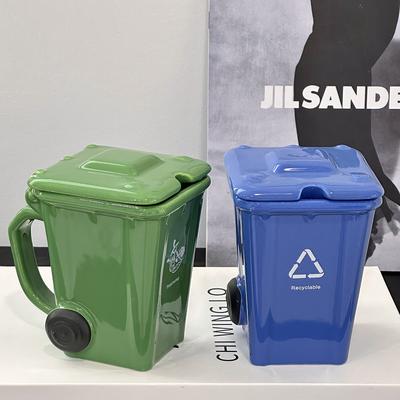
Youfap Market Creative Ceramic 3D Recycling Bin Mug, Trash Can Modeling Cup, Personality Funny Coffee Cup redA Fun Mug That Sparks Smiles Every Morning Turn your daily coffee moment into something playful with the Creative Ceramic 3D Recycling Bin Mug. Designed to look like a tiny trash can, this shape garbage trash can coffee cup adds humor and...49,97 $*Shipping: 0,00 $Secure redirect to the provider
-
Inspire Picks X5 3D AI Skin Analyzer High Definition Facial Skin Scanning System With UV & Moisture Detection accessoriesDeliver personalized skincare consultations with the AI skin analyzer designed for professional salons, spas, aesthetic clinics, and beauty studios. Featuring highdefinition imaging and intelligent facial analysis, this facial skin scanner evaluates...340,98 $*Shipping: 0,00 $Secure redirect to the provider
-
soundcore Nebula SpaceFlow AI Mapping Projection Accessory for Nebula X1 Pro & X1AI-Powered 3D Mapping, No Expertise Needed: SpaceFlow transforms your Nebula X1 Pro or X1 into a full AI mapping system—precision camera hardware and spatial recognition algorithms automatically build an accurate 3D model of your wall in minutes,...799,00 $*Shipping: 0,00 $Secure redirect to the provider
-
Inspire Picks AISIA Q1 3D AI Facial Skin Analyzer 8 Spectrum Professional Skin Analysis Machine 110vEnhance professional skincare consultations with the AI skin analyzer, designed to provide detailed facial imaging using advanced 3D technology and an 8spectrum analysis system. The facial skin analyzer captures highresolution images to help assess...2482,14 $*Shipping: 0,00 $Secure redirect to the provider




-
How do you conjugate French adjectives?
In French, adjectives must agree in gender (masculine or feminine) and number (singular or plural) with the noun they modify. To conjugate a French adjective, you need to add the appropriate ending to match the gender and number of the noun it describes. For example, to make the adjective "petit" (small) agree with a masculine singular noun, you would use "petit." But if the noun is feminine singular, you would use "petite." And for a masculine plural noun, you would use "petits," and for a feminine plural noun, you would use "petites." **
-
How do you conjugate in Hebrew?
In Hebrew, verbs are conjugated based on the subject of the sentence and the tense of the action. There are different conjugation patterns for each tense (past, present, future) and for each subject (I, you, he/she/it, we, you all, they). The verb root remains the same, but the conjugation changes to match the subject and tense. Additionally, Hebrew verbs also change based on gender and number of the subject. Learning the conjugation patterns and practicing with different verbs is essential for mastering Hebrew verb conjugation. **
-
Can you help me conjugate avoir?
Sure! The verb "avoir" is conjugated as follows: - J'ai (I have) - Tu as (You have) - Il/Elle/On a (He/She/One has) - Nous avons (We have) - Vous avez (You have) - Ils/Elles ont (They have) **
-
How do you conjugate in French?
In French, verbs are conjugated to match the subject of the sentence, including the person (I, you, he/she, we, they) and the tense (present, past, future, etc.). To conjugate a regular verb in the present tense, you remove the infinitive ending (-er, -ir, -re) and add the appropriate ending for the subject (je, tu, il/elle, nous, vous, ils/elles). For example, for the verb "parler" (to speak), you would conjugate it as "je parle" (I speak), "tu parles" (you speak), "il/elle parle" (he/she speaks), "nous parlons" (we speak), "vous parlez" (you speak), "ils/elles parlent" (they speak). Irregular verbs have their own unique conjugation patterns that need to be memorized. **

How do you conjugate "perire" in Latin?
The verb "perire" in Latin is conjugated as follows in the present tense: - I perish: pereo - You perish: peris - He/she/it perishes: perit - We perish: perimus - You (plural) perish: peritis - They perish: pereunt **
How do you conjugate the Passé Composé?
To conjugate the Passé Composé in French, you typically use the auxiliary verb "avoir" or "être" followed by the past participle of the main verb. The choice between "avoir" and "être" depends on the verb being used and whether it is a transitive or intransitive verb. The past participle of regular -er verbs is formed by replacing the -er ending with -é, for -ir verbs you replace the -ir ending with -i, and for -re verbs you replace the -re ending with -u. Irregular verbs have unique past participle forms that need to be memorized. **
Top-Angebote
Products related to Conjugate:
-
Uplift Essentials Creative 3D Revolver Modeling Ceramic Coffee Mug silverAdd a bold, playful edge to your morning routine with this 3D revolver gun ceramic mug. Designed with a creative and humorous touch, this mug features a unique handle modeled after a classic revolver, making it a standout piece for your kitchen or...92,97 $*Shipping: 0,00 $Secure redirect to the provider
-
Learn About: Mapping Value Pack (paperback) - by Jeanette FerraraStarting from their bedroom, and moving to their home, street, neighborhood, town, state, country, continent, and finally, planet, children will gain a whole new understanding of their place in the world with this engaging picture book series. With...23,76 $*Shipping: 0,00 $Secure redirect to the provider
-
Youfap Market Creative Ceramic 3D Recycling Bin Mug, Trash Can Modeling Cup, Personality Funny Coffee Cup redA Fun Mug That Sparks Smiles Every Morning Turn your daily coffee moment into something playful with the Creative Ceramic 3D Recycling Bin Mug. Designed to look like a tiny trash can, this shape garbage trash can coffee cup adds humor and...49,97 $*Shipping: 0,00 $Secure redirect to the provider
-
Inspire Picks X5 3D AI Skin Analyzer High Definition Facial Skin Scanning System With UV & Moisture Detection accessoriesDeliver personalized skincare consultations with the AI skin analyzer designed for professional salons, spas, aesthetic clinics, and beauty studios. Featuring highdefinition imaging and intelligent facial analysis, this facial skin scanner evaluates...340,98 $*Shipping: 0,00 $Secure redirect to the provider
-
When do you conjugate "avoir"?
The verb "avoir" is conjugated when talking about possession or to form compound tenses such as the passé composé. In these cases, "avoir" is conjugated according to the subject of the sentence. For example, "J'ai un chat" (I have a cat) or "Nous avons mangé" (We have eaten). **
-
How do you conjugate falloir?
The verb "falloir" is an impersonal verb, meaning it is only used in the third person singular. It is conjugated as "il faut" in the present tense, "il fallait" in the imperfect tense, and "il faudra" in the future tense. There is no need to conjugate it for different subjects, as it always remains in the third person singular form. **
-
How do you conjugate French adjectives?
In French, adjectives must agree in gender (masculine or feminine) and number (singular or plural) with the noun they modify. To conjugate a French adjective, you need to add the appropriate ending to match the gender and number of the noun it describes. For example, to make the adjective "petit" (small) agree with a masculine singular noun, you would use "petit." But if the noun is feminine singular, you would use "petite." And for a masculine plural noun, you would use "petits," and for a feminine plural noun, you would use "petites." **
-
How do you conjugate in Hebrew?
In Hebrew, verbs are conjugated based on the subject of the sentence and the tense of the action. There are different conjugation patterns for each tense (past, present, future) and for each subject (I, you, he/she/it, we, you all, they). The verb root remains the same, but the conjugation changes to match the subject and tense. Additionally, Hebrew verbs also change based on gender and number of the subject. Learning the conjugation patterns and practicing with different verbs is essential for mastering Hebrew verb conjugation. **
Similar search terms for Conjugate
-
soundcore Nebula SpaceFlow AI Mapping Projection Accessory for Nebula X1 Pro & X1AI-Powered 3D Mapping, No Expertise Needed: SpaceFlow transforms your Nebula X1 Pro or X1 into a full AI mapping system—precision camera hardware and spatial recognition algorithms automatically build an accurate 3D model of your wall in minutes,...799,00 $*Shipping: 0,00 $Secure redirect to the provider
-
Inspire Picks AISIA Q1 3D AI Facial Skin Analyzer 8 Spectrum Professional Skin Analysis Machine 110vEnhance professional skincare consultations with the AI skin analyzer, designed to provide detailed facial imaging using advanced 3D technology and an 8spectrum analysis system. The facial skin analyzer captures highresolution images to help assess...2482,14 $*Shipping: 0,00 $Secure redirect to the provider
-
Uplift Essentials Creative 3D Revolver Modeling Ceramic Coffee Mug goldAdd a bold, playful edge to your morning routine with this 3D revolver gun ceramic mug. Designed with a creative and humorous touch, this mug features a unique handle modeled after a classic revolver, making it a standout piece for your kitchen or...92,97 $*Shipping: 0,00 $Secure redirect to the provider
-
Youfap Market Creative Ceramic 3D Recycling Bin Mug, Trash Can Modeling Cup, Personality Funny Coffee Cup greyA Fun Mug That Sparks Smiles Every Morning Turn your daily coffee moment into something playful with the Creative Ceramic 3D Recycling Bin Mug. Designed to look like a tiny trash can, this shape garbage trash can coffee cup adds humor and...49,97 $*Shipping: 0,00 $Secure redirect to the provider
-
Can you help me conjugate avoir?
Sure! The verb "avoir" is conjugated as follows: - J'ai (I have) - Tu as (You have) - Il/Elle/On a (He/She/One has) - Nous avons (We have) - Vous avez (You have) - Ils/Elles ont (They have) **
-
How do you conjugate in French?
In French, verbs are conjugated to match the subject of the sentence, including the person (I, you, he/she, we, they) and the tense (present, past, future, etc.). To conjugate a regular verb in the present tense, you remove the infinitive ending (-er, -ir, -re) and add the appropriate ending for the subject (je, tu, il/elle, nous, vous, ils/elles). For example, for the verb "parler" (to speak), you would conjugate it as "je parle" (I speak), "tu parles" (you speak), "il/elle parle" (he/she speaks), "nous parlons" (we speak), "vous parlez" (you speak), "ils/elles parlent" (they speak). Irregular verbs have their own unique conjugation patterns that need to be memorized. **
-
How do you conjugate "perire" in Latin?
The verb "perire" in Latin is conjugated as follows in the present tense: - I perish: pereo - You perish: peris - He/she/it perishes: perit - We perish: perimus - You (plural) perish: peritis - They perish: pereunt **
-
How do you conjugate the Passé Composé?
To conjugate the Passé Composé in French, you typically use the auxiliary verb "avoir" or "être" followed by the past participle of the main verb. The choice between "avoir" and "être" depends on the verb being used and whether it is a transitive or intransitive verb. The past participle of regular -er verbs is formed by replacing the -er ending with -é, for -ir verbs you replace the -ir ending with -i, and for -re verbs you replace the -re ending with -u. Irregular verbs have unique past participle forms that need to be memorized. **
* All prices are inclusive of VAT and, if applicable, plus shipping costs. The offer information is based on the details provided by the respective shop and is updated through automated processes. Real-time updates do not occur, so deviations can occur in individual cases. ** Note: Parts of this content were created by AI.