Buy 3d-vermessung.eu ?
We are moving the project
3d-vermessung.eu .
Are you interested in purchasing the domain
3d-vermessung.eu ?
domain@kv-gmbh.de · 0541-91531010
Buy 3d-vermessung.eu ?
Which coordinates?
The coordinates refer to a set of values that pinpoint a specific location on a map or graph. These values typically include a pair of numbers, such as latitude and longitude, that help identify the exact position of a point on the Earth's surface. Coordinates are essential for navigation, mapping, and locating specific places accurately. **
How can points and angles be converted into 3D coordinates?
Points and angles can be converted into 3D coordinates using trigonometric functions and vector operations. To convert a point in 3D space to coordinates, we can use the distance formula to find the distance from the origin, and then use trigonometric functions to find the angles between the point and the x, y, and z axes. These angles can then be used to determine the coordinates of the point in 3D space. Similarly, angles can be converted into 3D coordinates by using trigonometric functions to determine the direction of a vector, and then using vector operations to find the coordinates of the endpoint of the vector. **

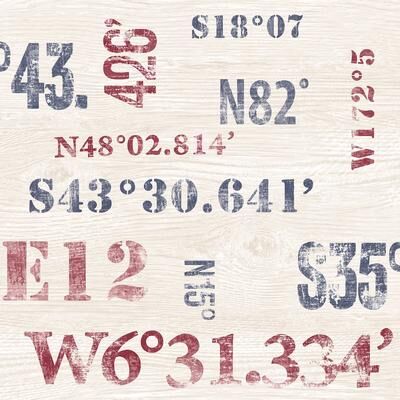
Similar search terms for Coordinates
Top-Angebote
Products related to Coordinates:
-
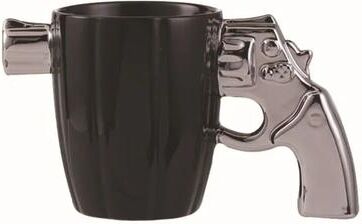
Uplift Essentials Creative 3D Revolver Modeling Ceramic Coffee Mug silverAdd a bold, playful edge to your morning routine with this 3D revolver gun ceramic mug. Designed with a creative and humorous touch, this mug features a unique handle modeled after a classic revolver, making it a standout piece for your kitchen or...92,97 $*Shipping: 0,00 $Secure redirect to the provider
-
Youfap Market Creative Ceramic 3D Recycling Bin Mug, Trash Can Modeling Cup, Personality Funny Coffee Cup redA Fun Mug That Sparks Smiles Every Morning Turn your daily coffee moment into something playful with the Creative Ceramic 3D Recycling Bin Mug. Designed to look like a tiny trash can, this shape garbage trash can coffee cup adds humor and...49,97 $*Shipping: 0,00 $Secure redirect to the provider
-
Learn About: Mapping Value Pack (paperback) - by Jeanette FerraraStarting from their bedroom, and moving to their home, street, neighborhood, town, state, country, continent, and finally, planet, children will gain a whole new understanding of their place in the world with this engaging picture book series. With...23,76 $*Shipping: 0,00 $Secure redirect to the provider


-
How can Cartesian coordinates be converted to polar coordinates?
To convert Cartesian coordinates (x, y) to polar coordinates (r, θ), we can use the following formulas: r = √(x^2 + y^2) - to find the distance from the origin to the point. θ = arctan(y/x) - to find the angle θ that the line connecting the point to the origin makes with the positive x-axis. These formulas allow us to represent a point in the Cartesian plane in terms of its distance from the origin and the angle it makes with the positive x-axis. **
-
What is the difference between polar coordinates and Cartesian coordinates?
Polar coordinates represent a point in a plane by its distance from a fixed point (the pole) and the angle it makes with a fixed axis (the polar axis). In contrast, Cartesian coordinates represent a point by its distance from two perpendicular axes (x and y axes). While polar coordinates are more suitable for representing circular and radial patterns, Cartesian coordinates are better for representing linear relationships and precise measurements in a plane. **
-
What is the difference between Cartesian coordinates and polar coordinates?
Cartesian coordinates are a system that uses two perpendicular axes (x and y) to locate a point in a plane by its distance from each axis. Polar coordinates, on the other hand, use a distance from the origin (r) and an angle (θ) to locate a point in a plane. In Cartesian coordinates, distances are measured horizontally and vertically, while in polar coordinates, distances are measured radially and angularly. The conversion between the two systems involves trigonometric functions. **
-
What are the differences between polar coordinates and Cartesian coordinates?
Polar coordinates use a distance and an angle to locate a point, while Cartesian coordinates use x and y coordinates. In polar coordinates, the distance is represented by the radius and the angle is measured counterclockwise from the positive x-axis. In Cartesian coordinates, the x-axis and y-axis are perpendicular to each other, forming a grid system. Polar coordinates are often used to describe circular or radial patterns, while Cartesian coordinates are more commonly used in everyday applications. **

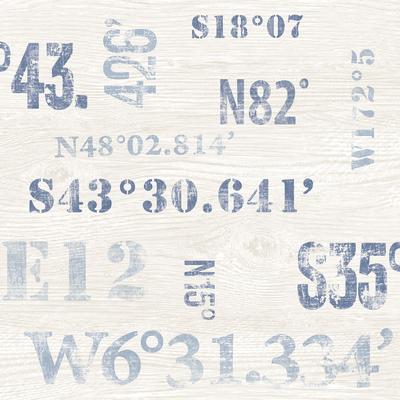
What are polar coordinates?
Polar coordinates are a two-dimensional coordinate system where each point on a plane is determined by a distance from a fixed point (the pole) and an angle from a fixed direction (the polar axis). The distance is called the radial coordinate or radius, denoted by 'r', and the angle is called the angular coordinate or polar angle, denoted by 'θ'. Polar coordinates are often used in mathematics, physics, and engineering to describe the position of a point in a more intuitive way compared to Cartesian coordinates. **
Can coordinates be abbreviated?
Yes, coordinates can be abbreviated using various formats depending on the context. For example, latitude and longitude coordinates can be abbreviated using decimal degrees or degrees, minutes, and seconds. Abbreviations can help make coordinates easier to communicate and write down, especially in situations where precision is not critical. However, it is important to ensure that the abbreviation format is clearly understood by all parties involved to avoid any confusion. **
Top-Angebote
Products related to Coordinates:
-
Uplift Treasures Adjustable Hand Grip Strength Trainer 6pcs CoordinatesProduct Description Build hand strength, improve grip power, and support finger rehabilitation with this adjustable hand grip strength trainer. Designed for fitness training and recovery, it helps strengthen fingers, wrists, and forearms while...76,97 $*Shipping: 0,00 $Secure redirect to the provider
-
Uplift Essentials Creative 3D Revolver Modeling Ceramic Coffee Mug silverAdd a bold, playful edge to your morning routine with this 3D revolver gun ceramic mug. Designed with a creative and humorous touch, this mug features a unique handle modeled after a classic revolver, making it a standout piece for your kitchen or...92,97 $*Shipping: 0,00 $Secure redirect to the provider
-
Youfap Market Creative Ceramic 3D Recycling Bin Mug, Trash Can Modeling Cup, Personality Funny Coffee Cup redA Fun Mug That Sparks Smiles Every Morning Turn your daily coffee moment into something playful with the Creative Ceramic 3D Recycling Bin Mug. Designed to look like a tiny trash can, this shape garbage trash can coffee cup adds humor and...49,97 $*Shipping: 0,00 $Secure redirect to the provider
-
Which coordinates?
The coordinates refer to a set of values that pinpoint a specific location on a map or graph. These values typically include a pair of numbers, such as latitude and longitude, that help identify the exact position of a point on the Earth's surface. Coordinates are essential for navigation, mapping, and locating specific places accurately. **
-
How can points and angles be converted into 3D coordinates?
Points and angles can be converted into 3D coordinates using trigonometric functions and vector operations. To convert a point in 3D space to coordinates, we can use the distance formula to find the distance from the origin, and then use trigonometric functions to find the angles between the point and the x, y, and z axes. These angles can then be used to determine the coordinates of the point in 3D space. Similarly, angles can be converted into 3D coordinates by using trigonometric functions to determine the direction of a vector, and then using vector operations to find the coordinates of the endpoint of the vector. **
-
How can Cartesian coordinates be converted to polar coordinates?
To convert Cartesian coordinates (x, y) to polar coordinates (r, θ), we can use the following formulas: r = √(x^2 + y^2) - to find the distance from the origin to the point. θ = arctan(y/x) - to find the angle θ that the line connecting the point to the origin makes with the positive x-axis. These formulas allow us to represent a point in the Cartesian plane in terms of its distance from the origin and the angle it makes with the positive x-axis. **
-
What is the difference between polar coordinates and Cartesian coordinates?
Polar coordinates represent a point in a plane by its distance from a fixed point (the pole) and the angle it makes with a fixed axis (the polar axis). In contrast, Cartesian coordinates represent a point by its distance from two perpendicular axes (x and y axes). While polar coordinates are more suitable for representing circular and radial patterns, Cartesian coordinates are better for representing linear relationships and precise measurements in a plane. **
Similar search terms for Coordinates
-
Learn About: Mapping Value Pack (paperback) - by Jeanette FerraraStarting from their bedroom, and moving to their home, street, neighborhood, town, state, country, continent, and finally, planet, children will gain a whole new understanding of their place in the world with this engaging picture book series. With...23,76 $*Shipping: 0,00 $Secure redirect to the provider
-
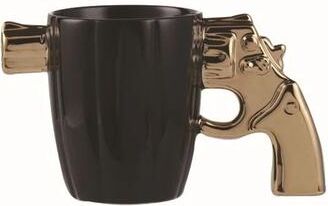
Uplift Essentials Creative 3D Revolver Modeling Ceramic Coffee Mug goldAdd a bold, playful edge to your morning routine with this 3D revolver gun ceramic mug. Designed with a creative and humorous touch, this mug features a unique handle modeled after a classic revolver, making it a standout piece for your kitchen or...92,97 $*Shipping: 0,00 $Secure redirect to the provider
-
What is the difference between Cartesian coordinates and polar coordinates?
Cartesian coordinates are a system that uses two perpendicular axes (x and y) to locate a point in a plane by its distance from each axis. Polar coordinates, on the other hand, use a distance from the origin (r) and an angle (θ) to locate a point in a plane. In Cartesian coordinates, distances are measured horizontally and vertically, while in polar coordinates, distances are measured radially and angularly. The conversion between the two systems involves trigonometric functions. **
-
What are the differences between polar coordinates and Cartesian coordinates?
Polar coordinates use a distance and an angle to locate a point, while Cartesian coordinates use x and y coordinates. In polar coordinates, the distance is represented by the radius and the angle is measured counterclockwise from the positive x-axis. In Cartesian coordinates, the x-axis and y-axis are perpendicular to each other, forming a grid system. Polar coordinates are often used to describe circular or radial patterns, while Cartesian coordinates are more commonly used in everyday applications. **
-
What are polar coordinates?
Polar coordinates are a two-dimensional coordinate system where each point on a plane is determined by a distance from a fixed point (the pole) and an angle from a fixed direction (the polar axis). The distance is called the radial coordinate or radius, denoted by 'r', and the angle is called the angular coordinate or polar angle, denoted by 'θ'. Polar coordinates are often used in mathematics, physics, and engineering to describe the position of a point in a more intuitive way compared to Cartesian coordinates. **
-
Can coordinates be abbreviated?
Yes, coordinates can be abbreviated using various formats depending on the context. For example, latitude and longitude coordinates can be abbreviated using decimal degrees or degrees, minutes, and seconds. Abbreviations can help make coordinates easier to communicate and write down, especially in situations where precision is not critical. However, it is important to ensure that the abbreviation format is clearly understood by all parties involved to avoid any confusion. **
* All prices are inclusive of VAT and, if applicable, plus shipping costs. The offer information is based on the details provided by the respective shop and is updated through automated processes. Real-time updates do not occur, so deviations can occur in individual cases. ** Note: Parts of this content were created by AI.